
Press kits: tell a research story without overstating the evidence
You need to explain a paper in public: what headline, what image, which limitation? The Press kit, available with Premium+, prepares material for authors, researchers asked to comment and journalists. Each role uses the same source paper, with findings, supporting passages and checks to make.
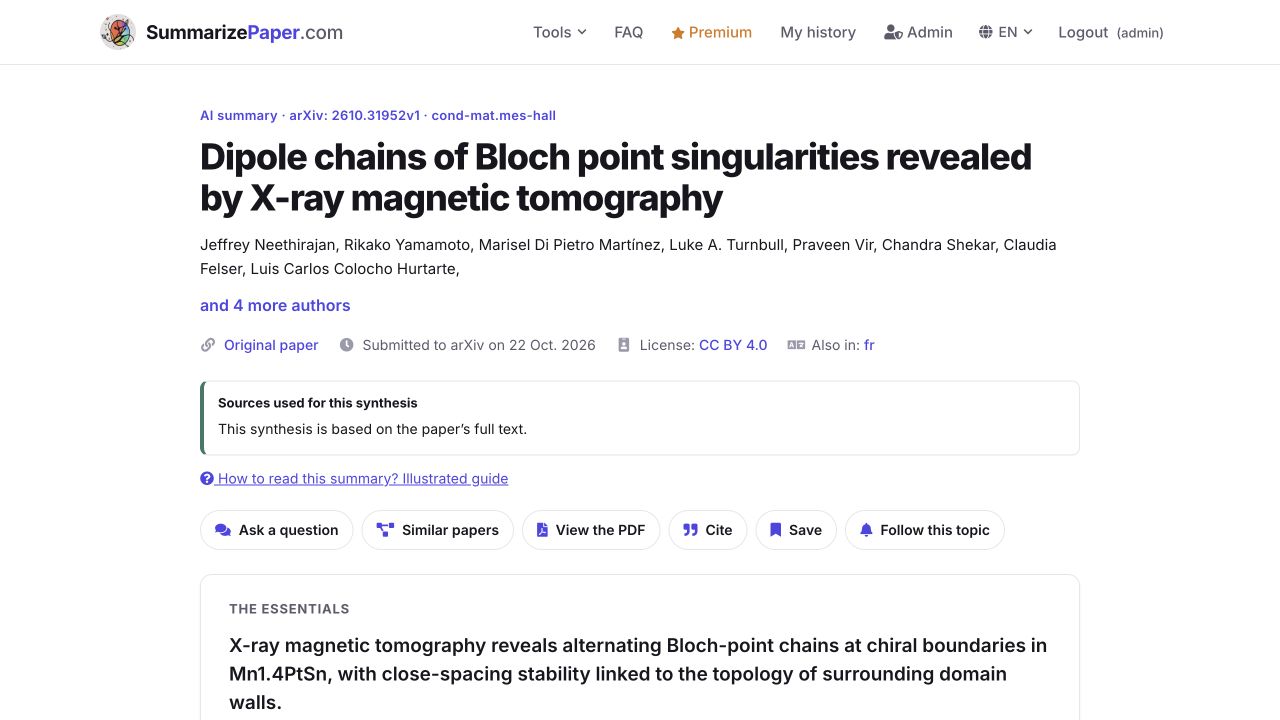
Our example is Dipole chains of Bloch point singularities revealed by X-ray magnetic tomography, by Neethirajan et al. Three-dimensional images reveal a chain of magnetic defects. We will turn that observation into communication material while separating what the images establish from the possibilities they open.
1. Choose the paper and open its kit
Open the summary page. It shows CC BY 4.0 and This synthesis is based on the paper’s full text. The licence and the source actually analysed are separate checks: permission to read more does not guarantee that the full text was successfully retrieved.
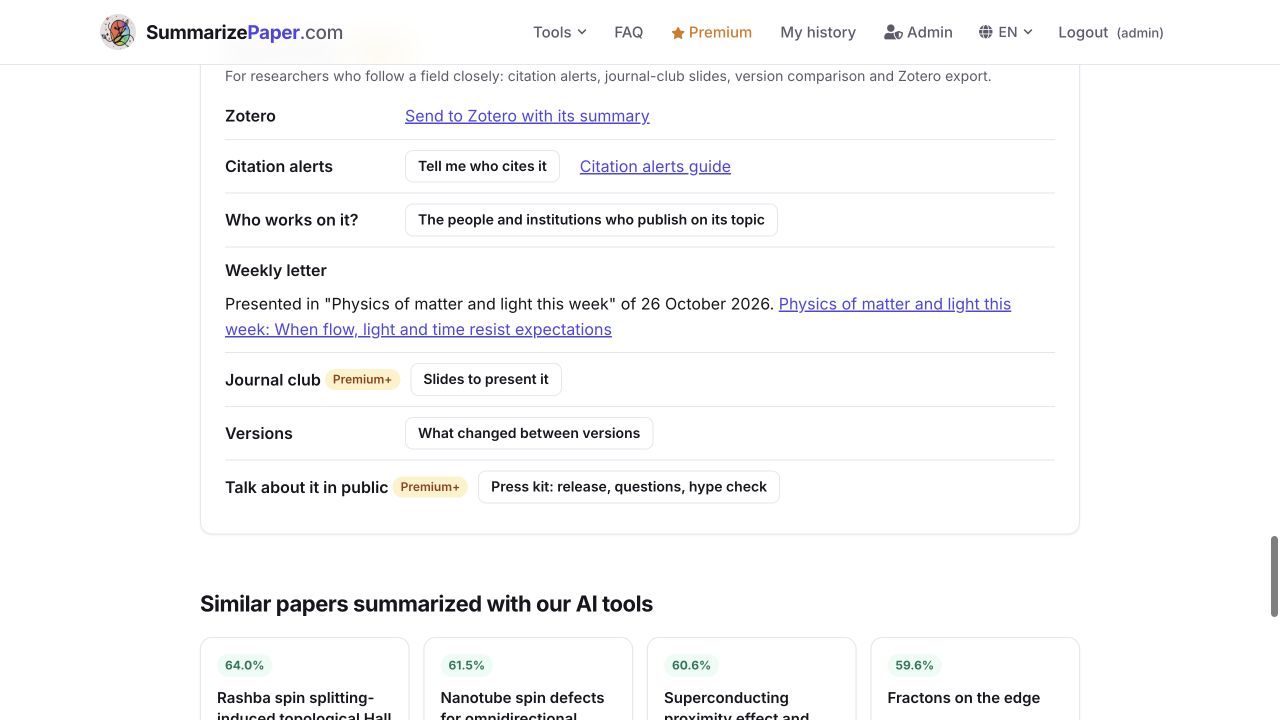
Under Tools for this paper, find Talk about it in public · Premium+, then Press kit: release, questions, hype check. Alternatively, use the Press kit home page to search for a title, arXiv identifier or DOI. A title search leads to results: select the right reference and open the tool from its paper page.
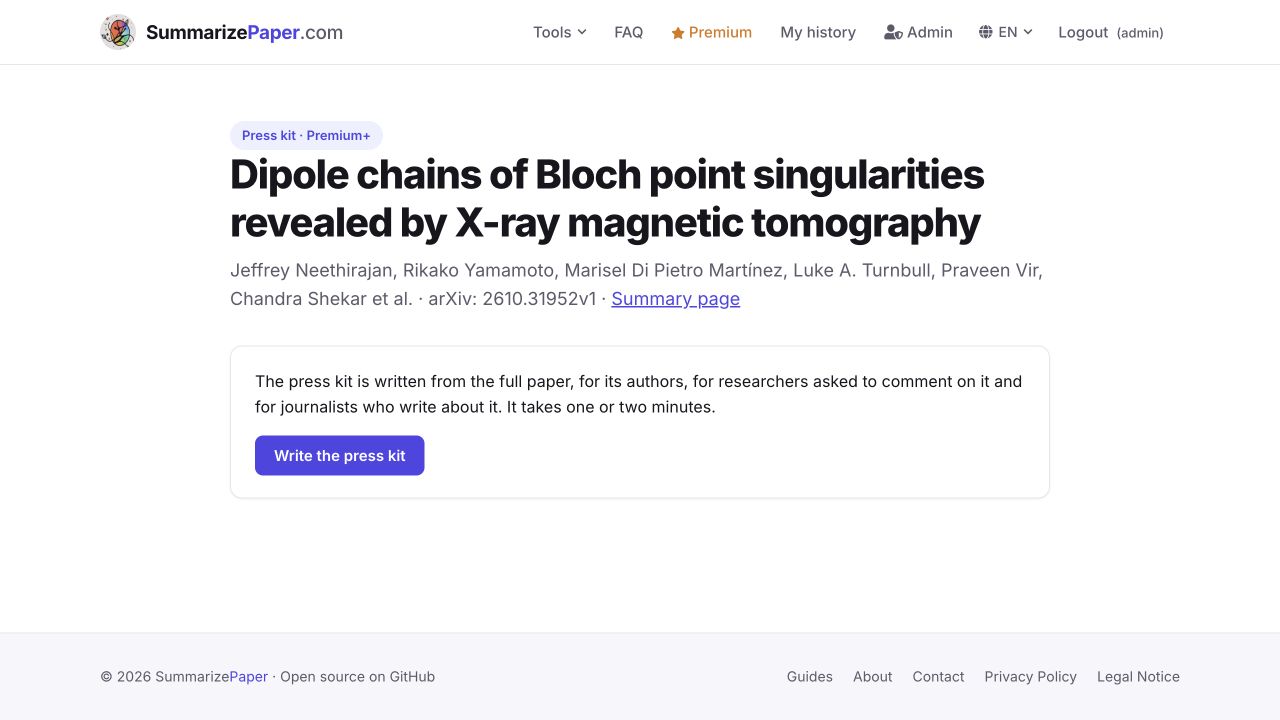
Check the paper and version, then click Write the press kit. The kit is prepared in the page’s language. Wait until the result is complete before using its material.
2. Read the brief and check the source used
In 30 seconds provides a suggested headline, an accessible explanation and an assessment of the finding’s strength. Here, Read: full text confirms the source used for the kit itself. Other papers may have an abstract-only or partial-text label; adapt your checking accordingly.
The brief separates the observed chain from conclusions about its stability. Keep that distinction in your headline and opening: imaging a configuration and demonstrating its behaviour over time are different findings.
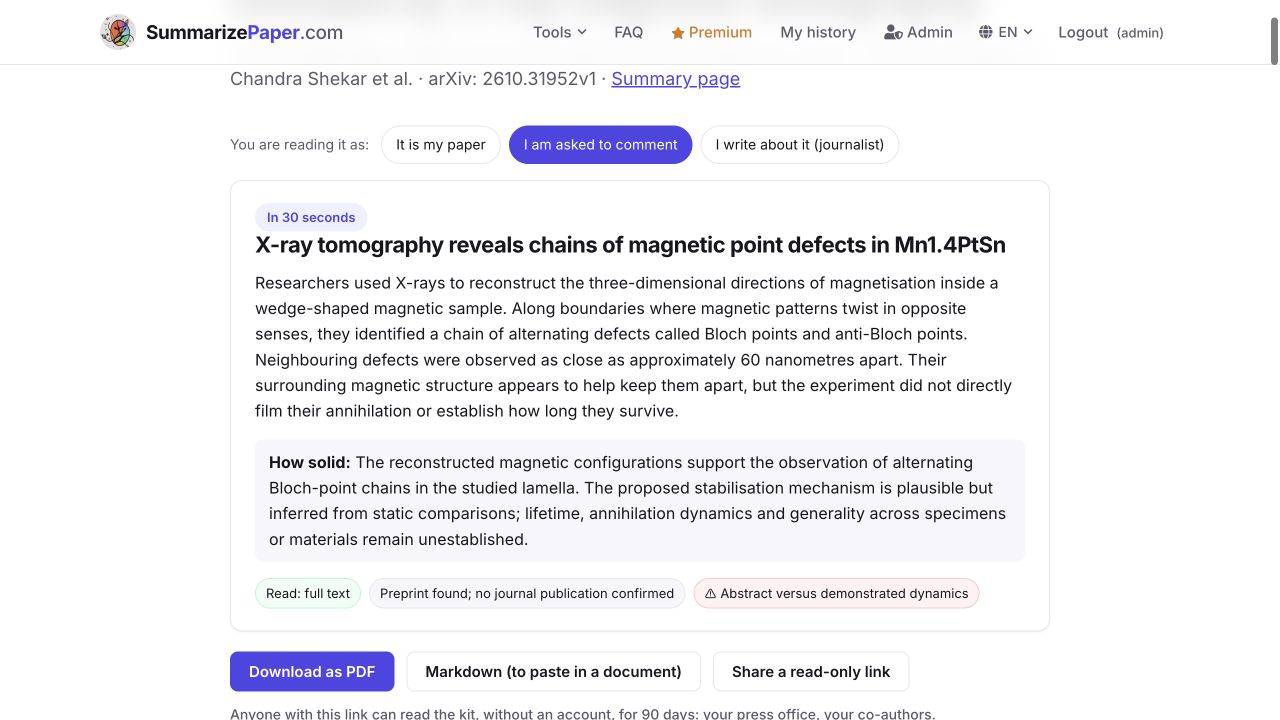
The role buttons organise the relevant material without requiring three separate generations:
| Your situation | Role | Material to prepare |
|---|---|---|
| You are an author | It is my paper | Release, likely journalist questions, lay summary and short thread |
| Someone requests your scientific assessment | I am asked to comment | Strengths, weaknesses and evidence that would settle the claim |
| You are reporting the study | I write about it (journalist) | Reporting angles, wording checks and questions for the authors |
Choosing a role adapts the reading; it does not establish authorship or expertise.
3. Author: work from a draft release
Choose It is my paper and read Draft press release. The kit offers a title, opening and body for review with your team and press office. Check that the sentences carrying the central message are supported by the paper; the shared evidence sections help you find that support.
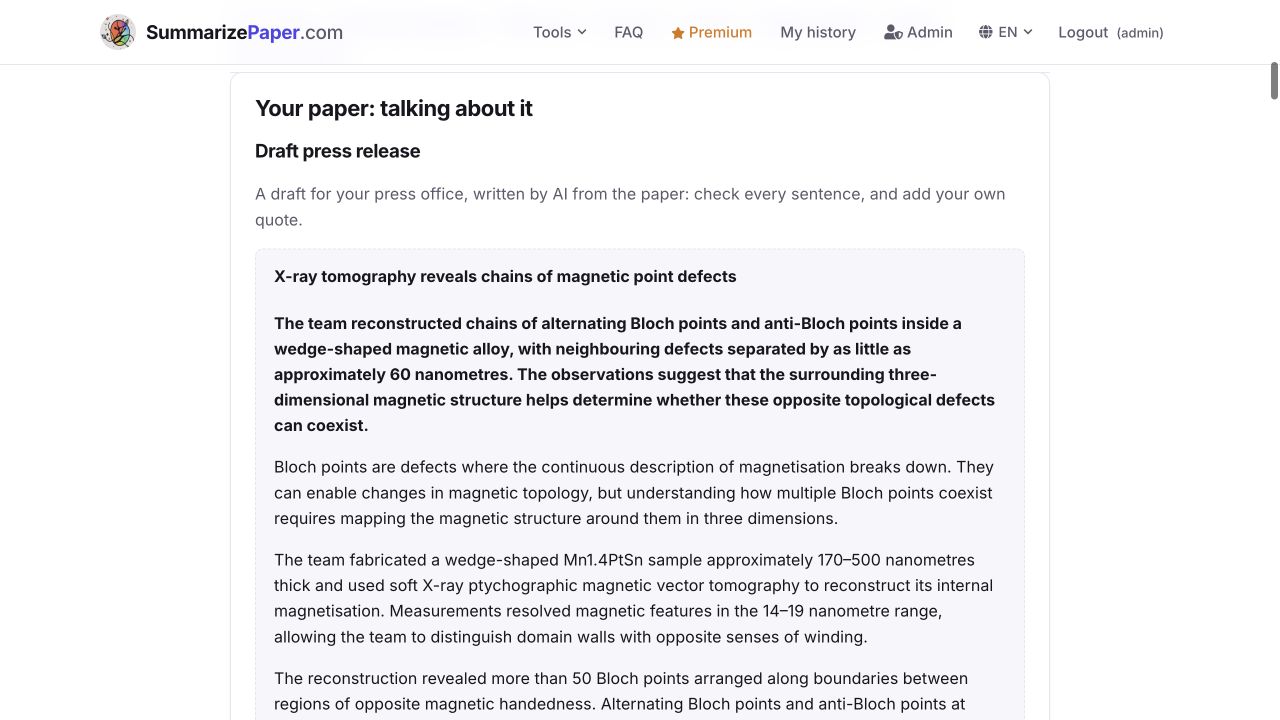
Your quote is a prompt to obtain a real statement from the team. Replace it with an authentic quote approved by the person concerned before distribution. Copy the release copies the draft, so check its placeholders too.
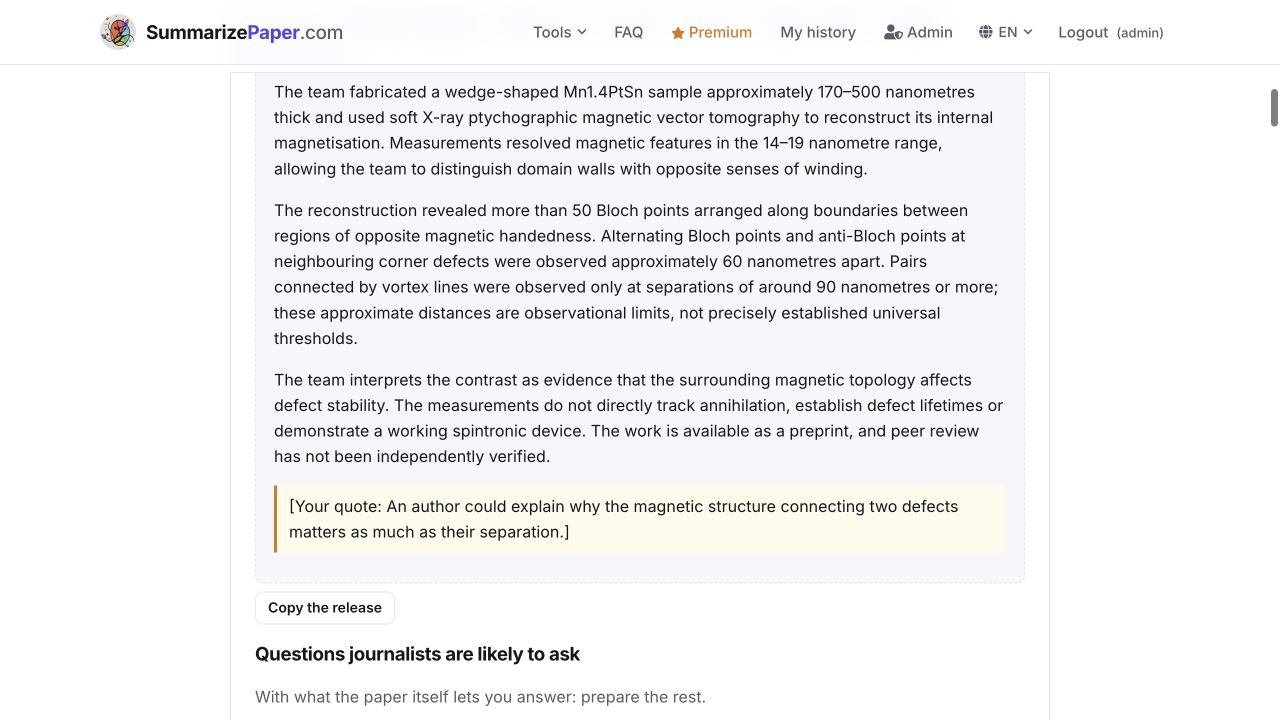
The likely journalist questions come with what the paper already lets you answer. Likely misreadings, a lay summary and a short thread offer other formats for preparing a public presentation. Adapt the language to your context and voice.
4. Researcher: build an evidence-based comment
Choose I am asked to comment. This role separates strengths, weaknesses, open questions and what would settle the main claim. In this example, the assessment of imaging resolution points to the methodological appendix and its original passage.
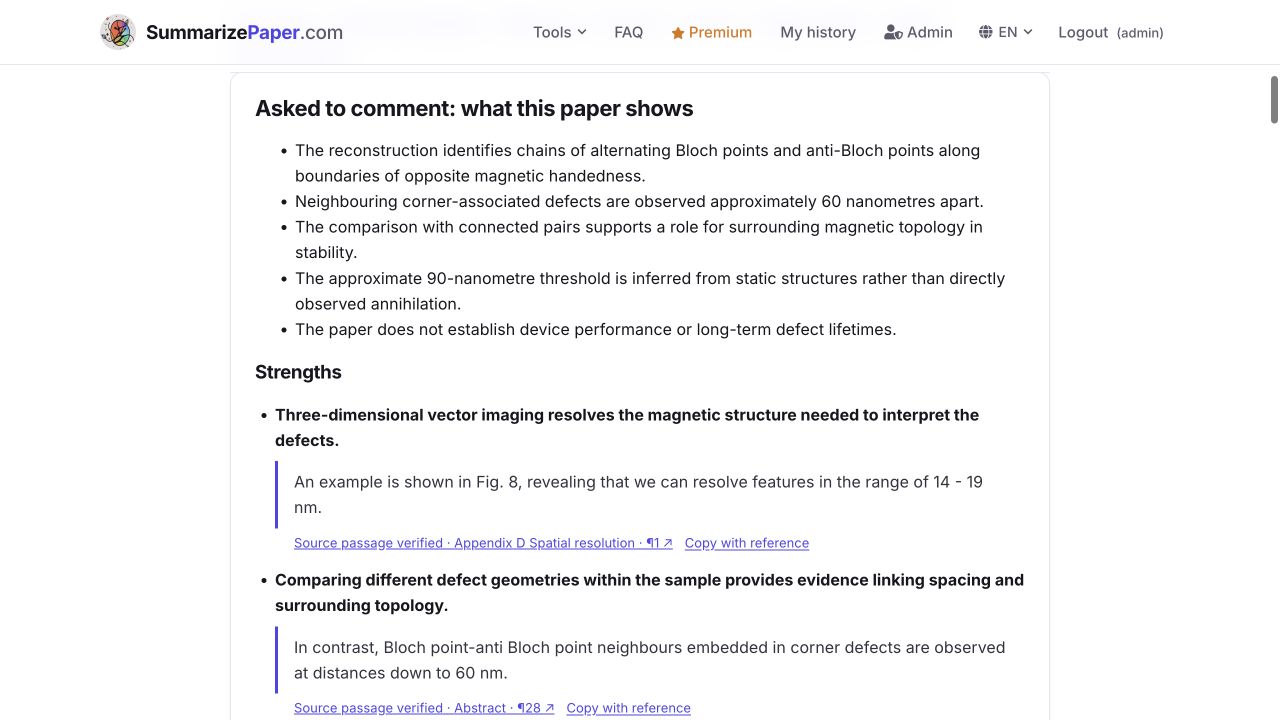
Use these anchors to write your own assessment. A matching passage confirms what the authors wrote; the method’s reliability and the reach of the interpretation still require judgment. The proposed comment at the end of this role is for you to rewrite and personally stand behind.
5. Journalist: choose an angle and prepare questions
Choose I write about it (journalist). Reporting angles pairs a story idea with a concrete next step: consult a specialist, ask for a complementary experiment or examine reproducibility. This turns a possible headline into a reporting task.
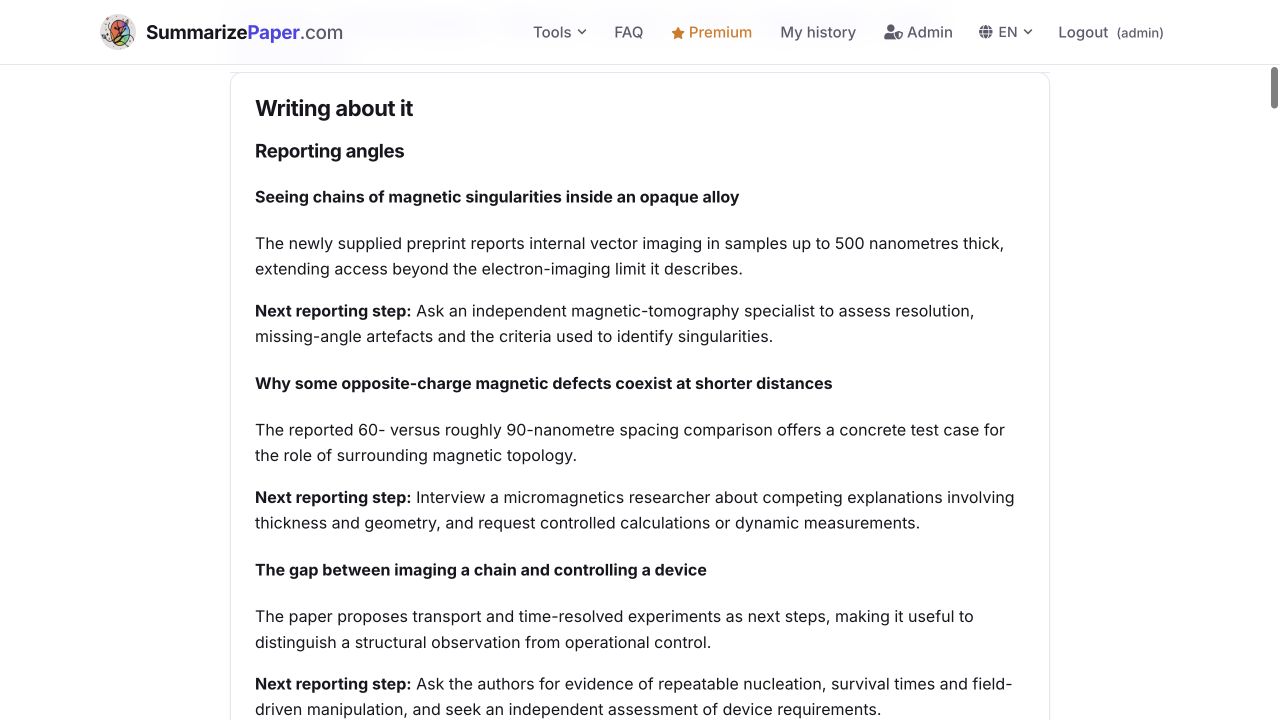
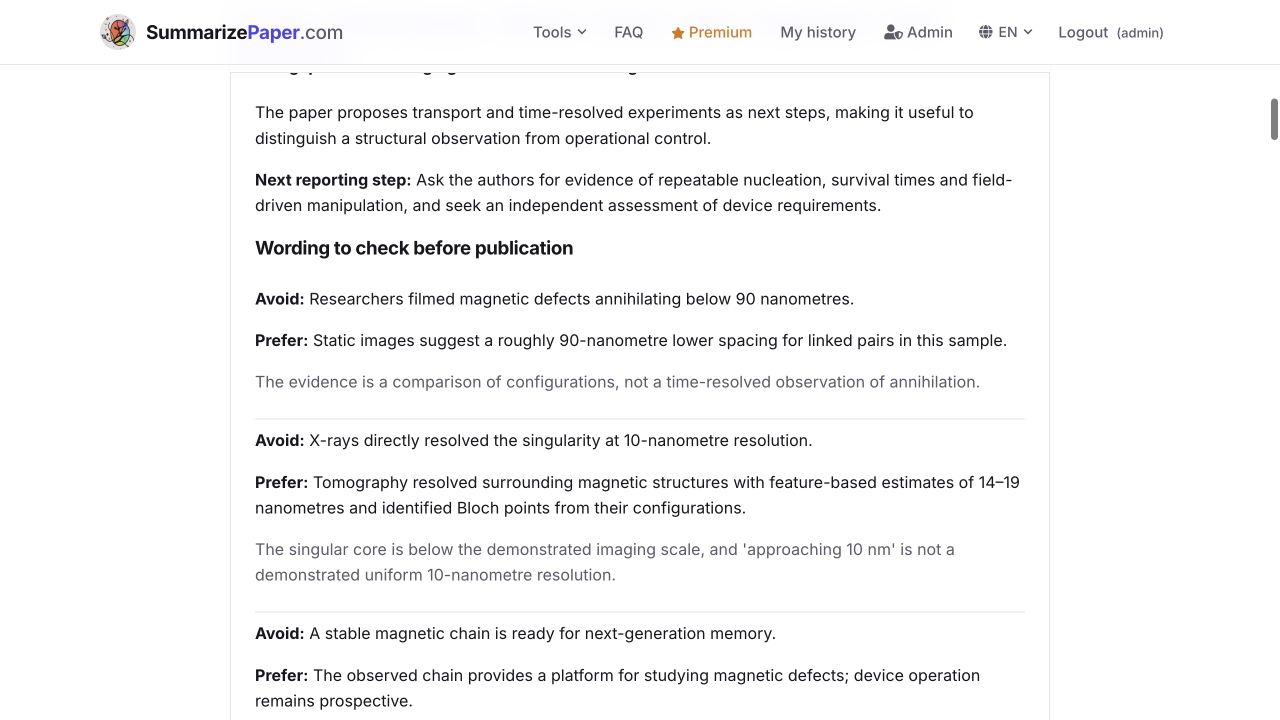
Under Wording to check before publication, compare Avoid and Prefer. Here, static configurations do not amount to a film of annihilation. The kit also distinguishes identifying defects through their magnetic surroundings from directly imaging their cores.
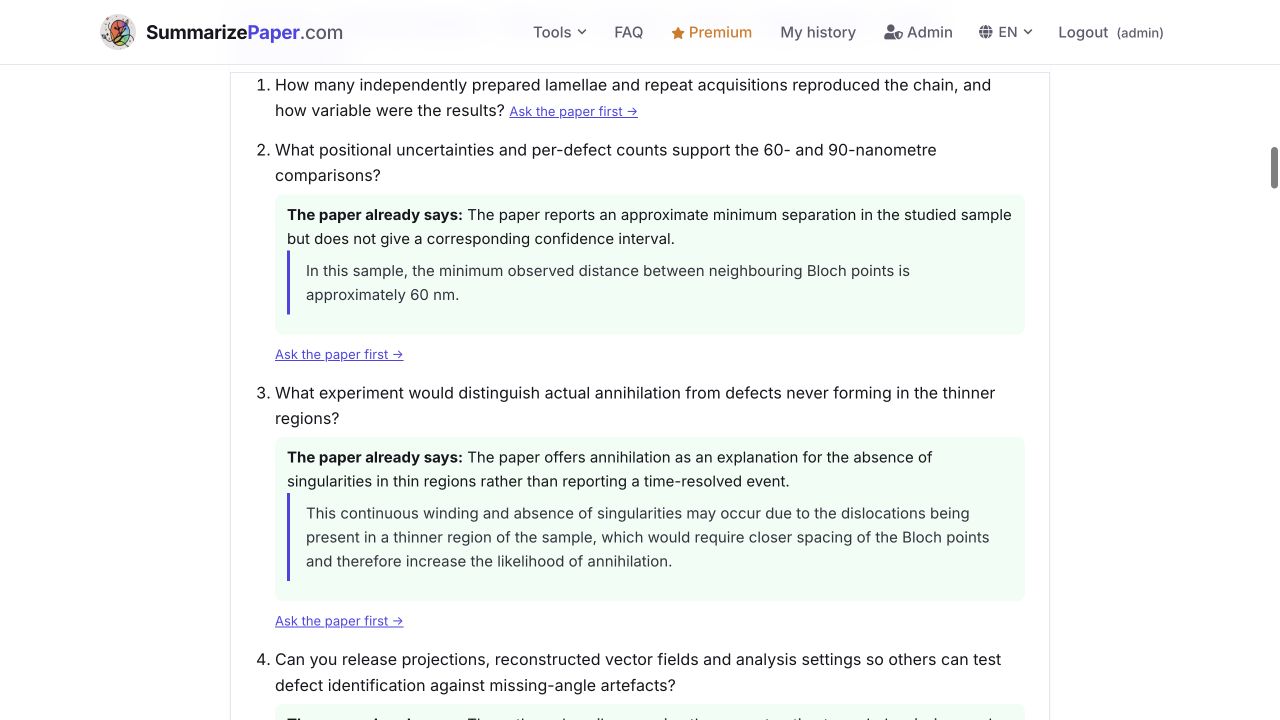
Questions to ask the authors separates questions still to clarify from those where The paper already says something relevant. Ask the paper first continues the reading in the assistant before an interview. This example raises independent repetitions, uncertainties and the data needed to reproduce the analysis.
6. Check findings against their passages
Open Findings and source evidence. Each card combines a claim, its significance, a supporting passage and a limitation. Result and Interpretation labels help preserve the type of claim in your story.
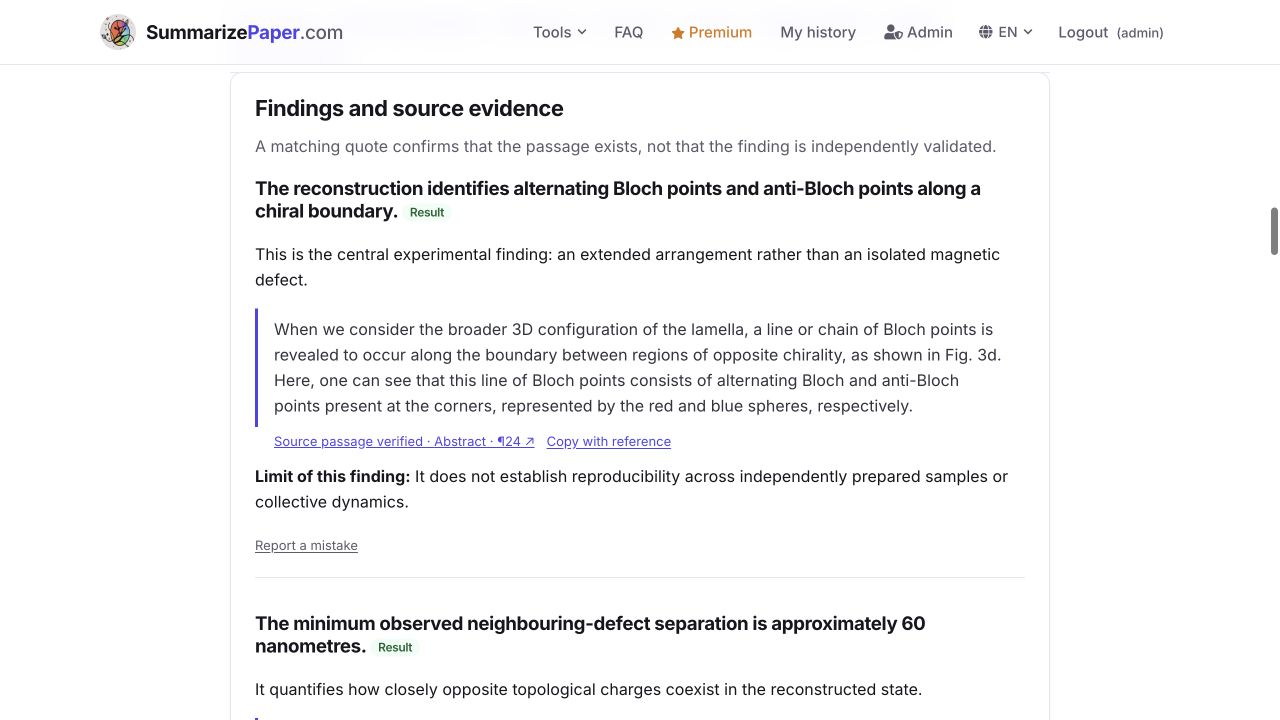
The source link returns to the document; Copy with reference retains attribution with the passage. Scientific quotations keep their original language. If the kit flags an unmatched passage or a numerical mismatch, check the original before reusing the claim.
7. Check novelty and strong wording
Under What’s new, distinguish the authors’ novelty claim from the automatic comparison with earlier work. This example exposes a real limit: the supplied related-work abstracts do not establish priority for the Bloch-point chain. The kit says so; complete the literature check before claiming a world first.
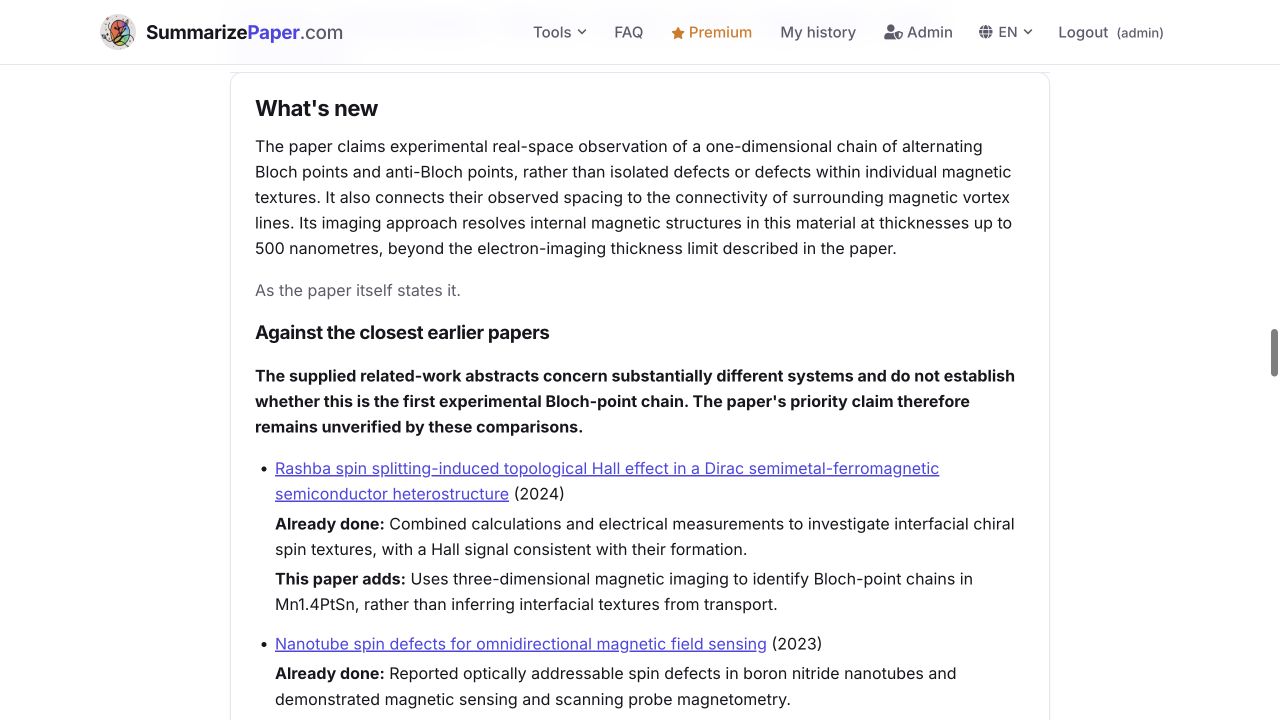
The Hype check examines methods, uncertainties and the scope of the findings. Here, a central question is what static images can establish about inferred annihilation. Multiple defects within one lamella also do not constitute the same number of independent experimental replications.
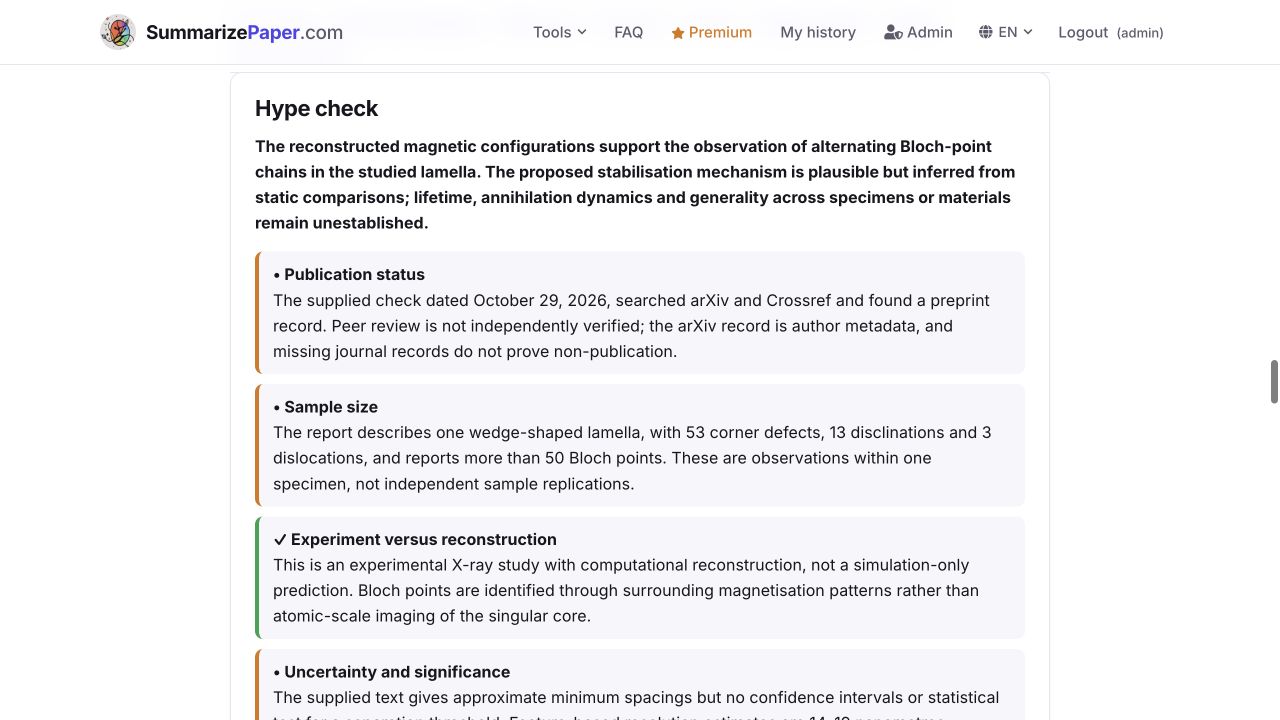
Use these points to calibrate your wording. Continue with the single-paper chat and return to the passages behind each limitation.
8. Choose a figure and preserve its credit
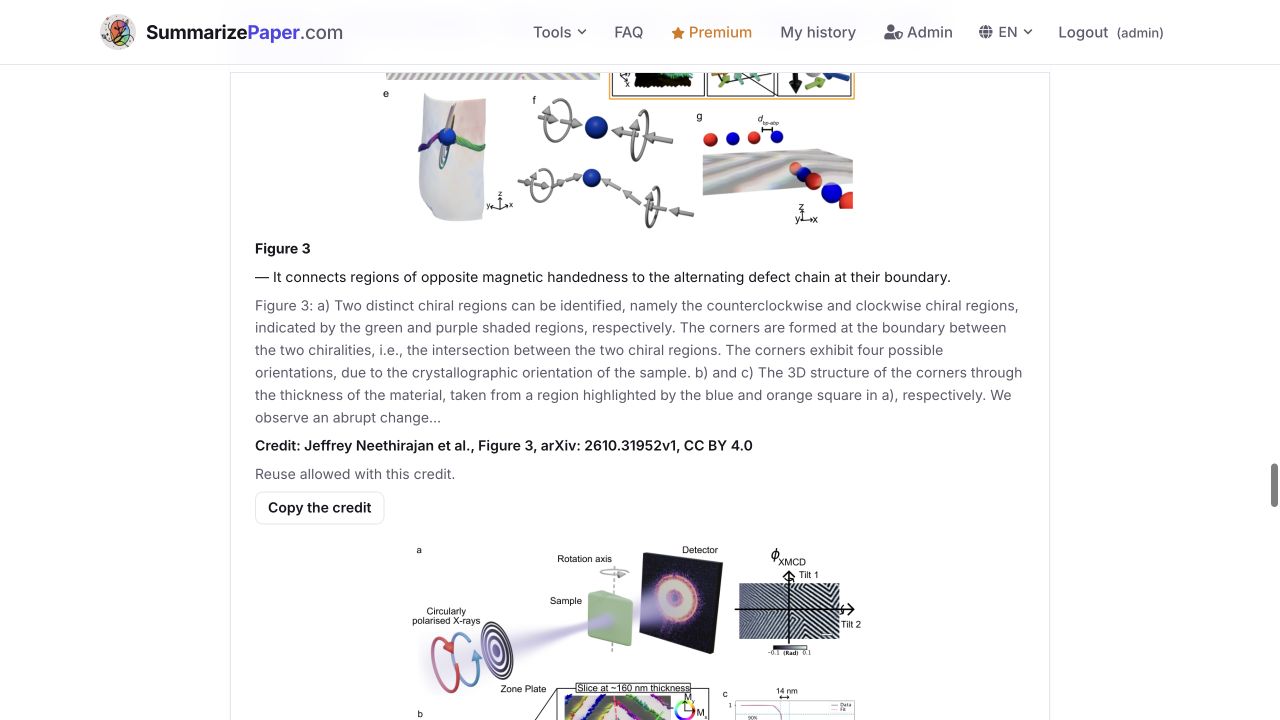
Figures for the press proposes two images from the paper in this example. Figure 3 appears in both language versions of the kit. It brings together magnetic regions, reconstructions and schematics of the singularities. Explain what the panels represent; a reconstruction and a schematic serve different purposes in the story.
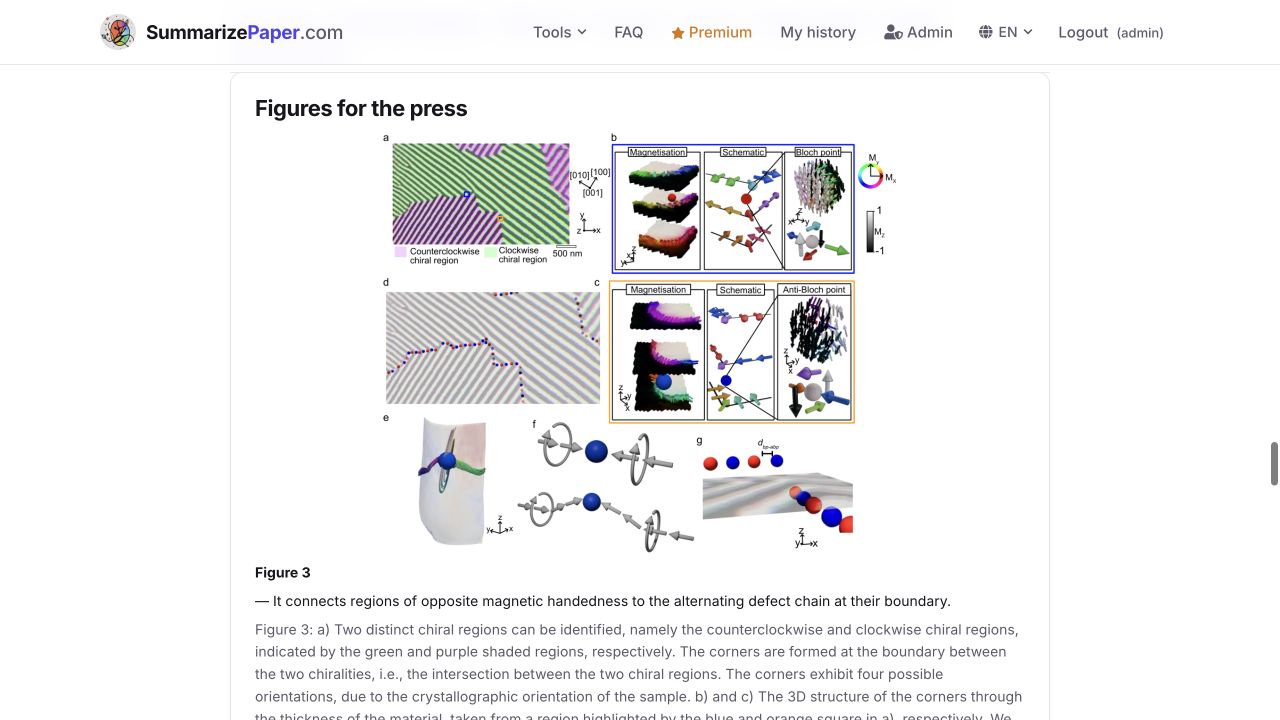
Below the image, read its reporting relevance, original caption and Credit. Copy the credit keeps the authors, figure number, reference and CC BY 4.0 licence. Retain the source link and identify any adaptations when reusing it.
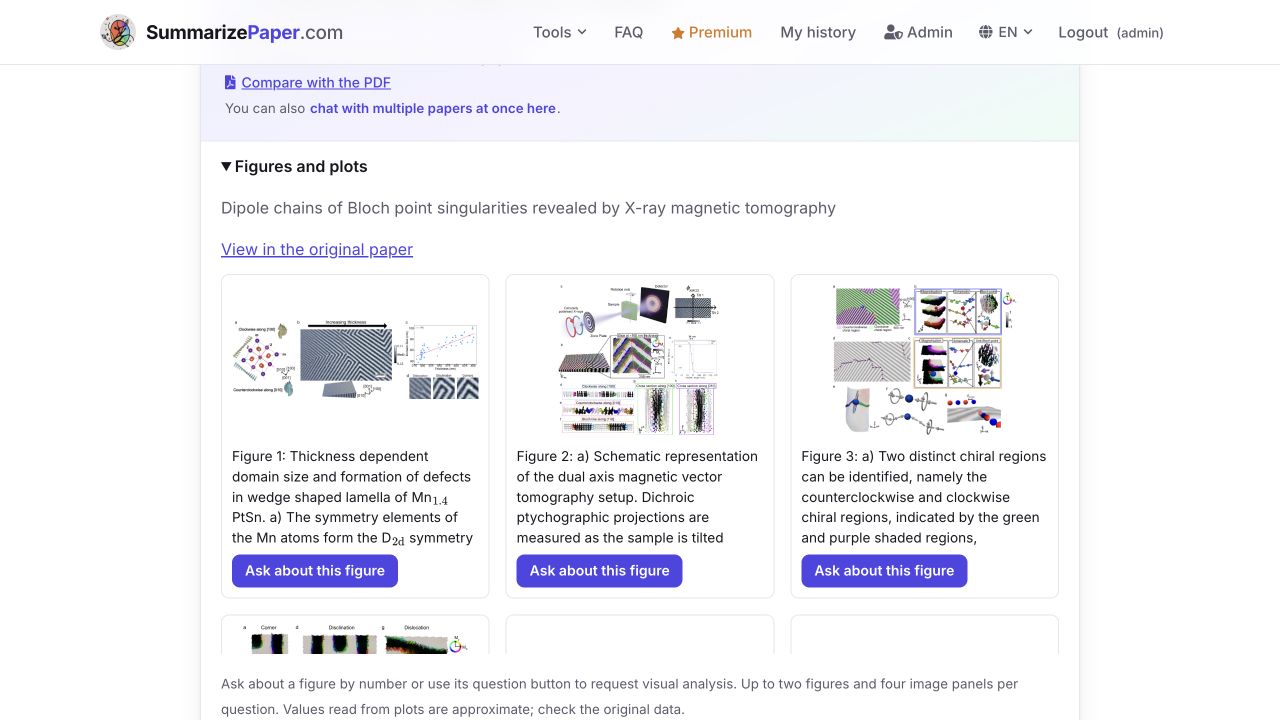
The kit is a selection for communication. To explore all ten available figures, including appendices, return to the paper page and expand Figures and plots. Scroll within the grid and enlarge images that require closer inspection.
9. Check publication status, then export what you need
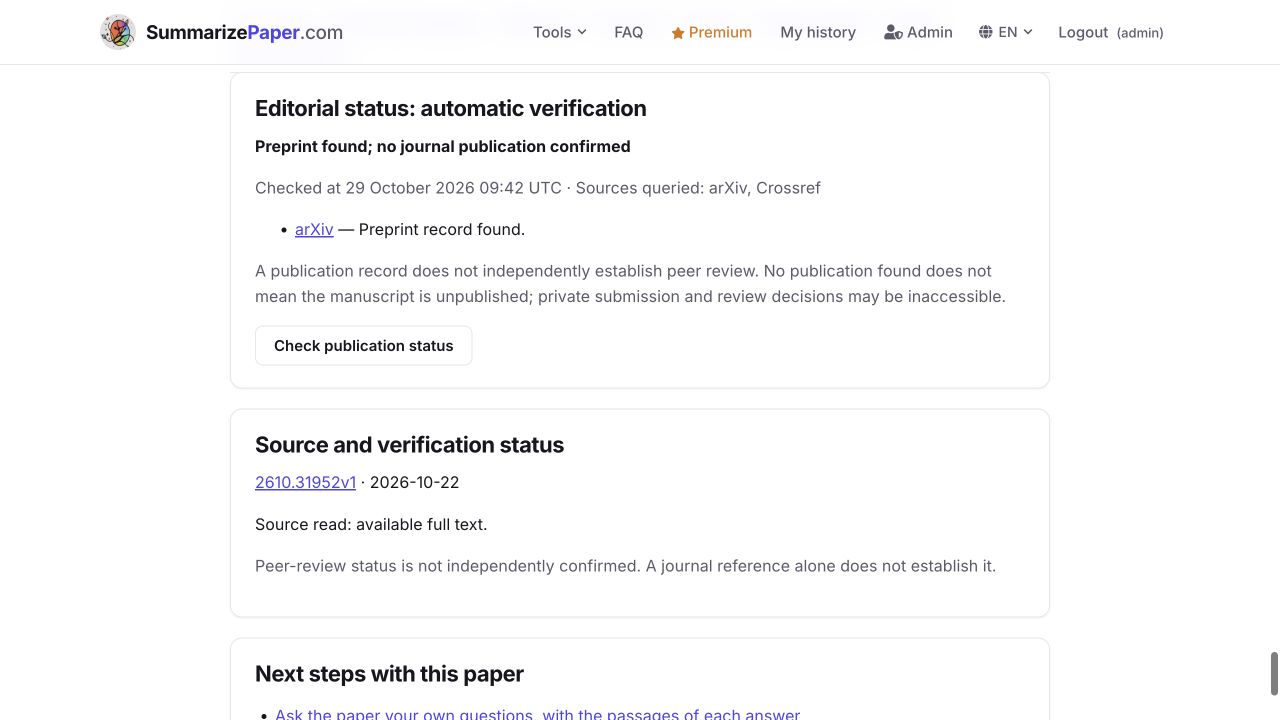
Under Source and verification status, check the version and the scope analysed. The publication panel lists the sources queried and the check date. At our visit it found a preprint without confirming a journal publication. Not finding a publication does not establish that none exists, and a bibliographic record alone does not confirm peer review.
Researchers to approach for outside comment offers leads to examine. Read the publications behind a suggestion and check topic expertise, affiliations and collaborations. A similar word in a title does not by itself establish a suitable commentator. The country filter narrows the search geographically without establishing scientific independence.
Return to Download as PDF or Markdown (to paste in a document): the export follows the selected role. If you create a read-only share link, anyone possessing it can read the kit for 90 days; sharing can be stopped from the kit. Review the version you intend to send before sharing it with your team or press office.
For an oral presentation, continue to journal-club slides from the paper’s tools. For this case in a wider scientific narrative, see the weekly letters guide.
Turn a paper into communication grounded in its evidence · Premium+
Explore this press kit