
Find a research placement: from papers to a first enquiry
You know the research question you want to explore, but not whom to contact. Start with the people publishing on it, read a relevant paper, and prepare a message that explains the connection. Find a research placement, included in Premium+, brings those steps together.
Our example uses a fictional M2 student with Python and numerical-modelling skills, seeking a six-month internship from April 2027, preferably in France but open to alternatives. The topic is the origin of gas in debris discs. This English walkthrough follows a lead connected to molecular observations of 49 Ceti, rather than the planet–gas simulations used in the French example.
1. Describe the placement and a focused research topic
Sign in to Premium+ and choose Your current level, then Research internship under You are looking for. Choose PhD for a doctoral enquiry.
In Research topic, combine an object, a question and useful methods. Our example is:
Gas origins in debris discs: primordial and secondary models, ALMA observations of CO and neutral carbon, HCO+ chemistry.
That gives the search more to work with than “astronomy”. Include what you want to learn; you do not need to claim expertise in every method.
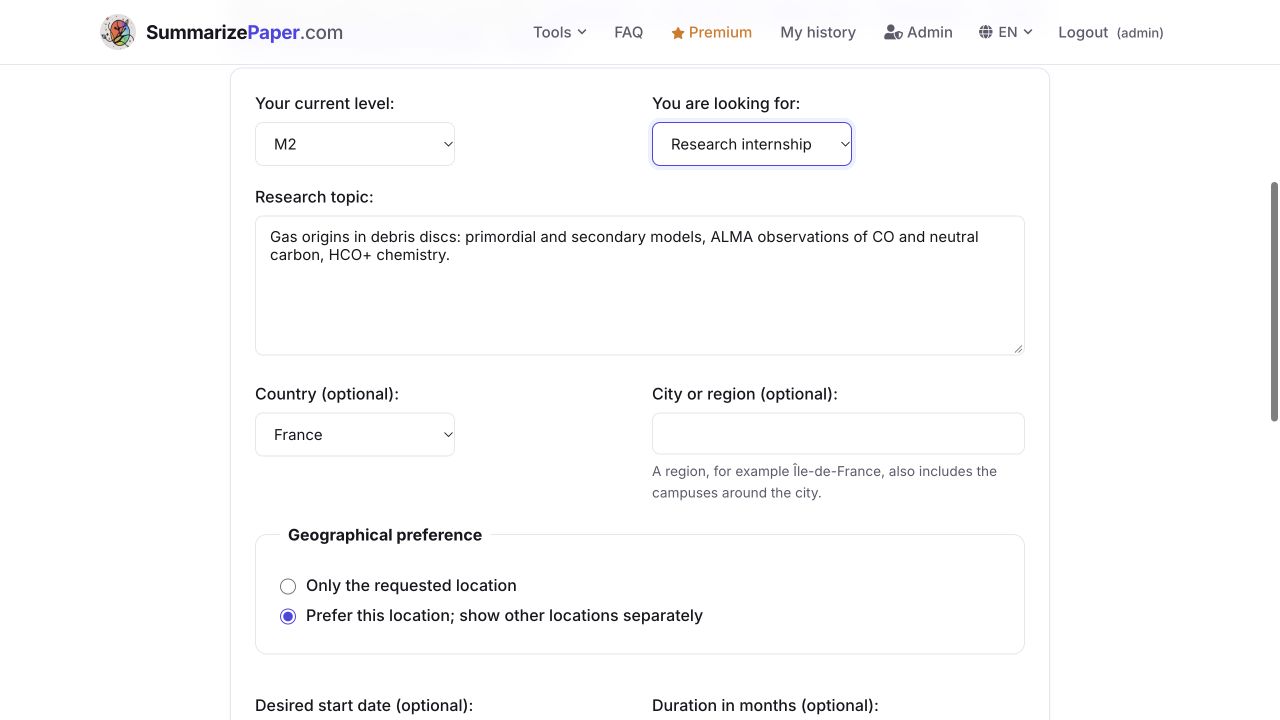
Choose France and Prefer this location; show other locations separately when you can consider alternatives. Use Only the requested location for a firm geographical constraint. An optional city or region narrows the area; leave it blank to search across the country.
2. Add dates, duration and skills
Enter the preferred start date, duration in months, and skills separated by commas. Here we use Python, numerical modelling, data analysis and radiative transfer. These preferences help prepare a meaningful enquiry; they do not establish that an institution accepts the proposed dates or level.
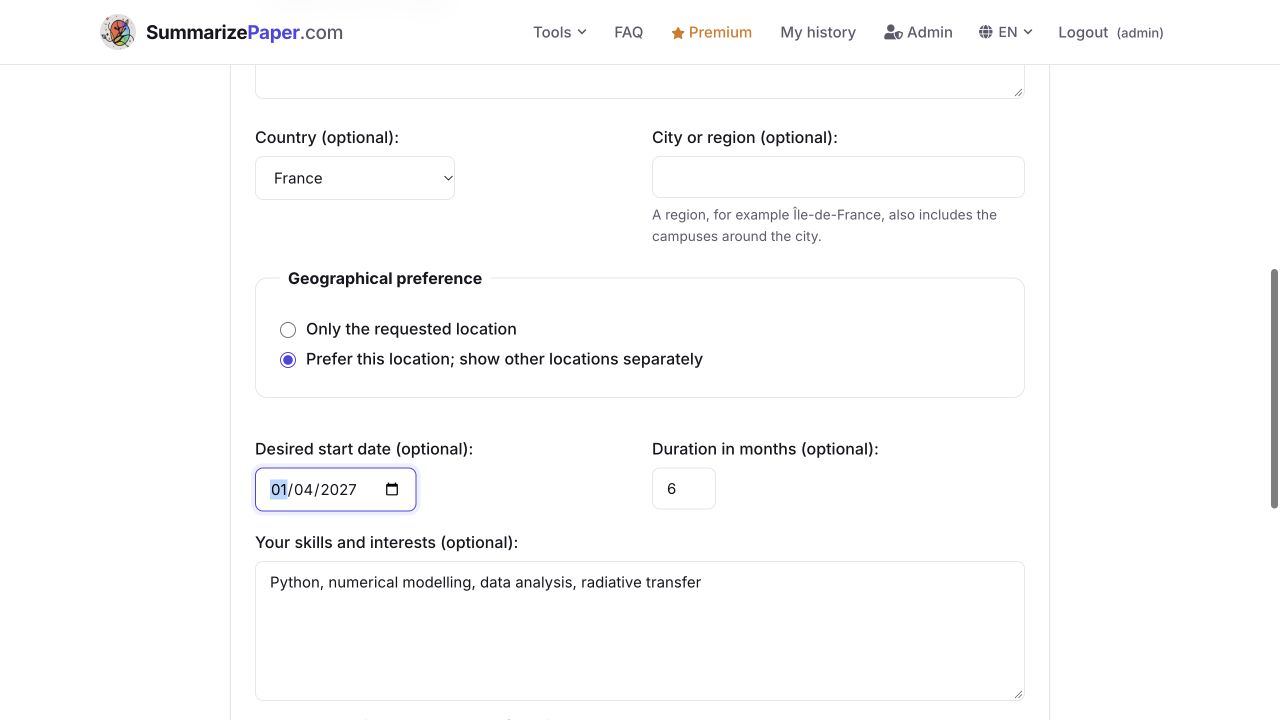
Click Find potential contacts. The tool checks recent publications and affiliation metadata, then suggests up to ten people and three readings per person. Allow a few minutes, and return through Your searches if you leave the page.
3. Use the overview to narrow the reading task
The search completed on 28 October 2026 returns ten people. Combining Requested location only with Signs first, last or as corresponding author leaves four leads in this example.
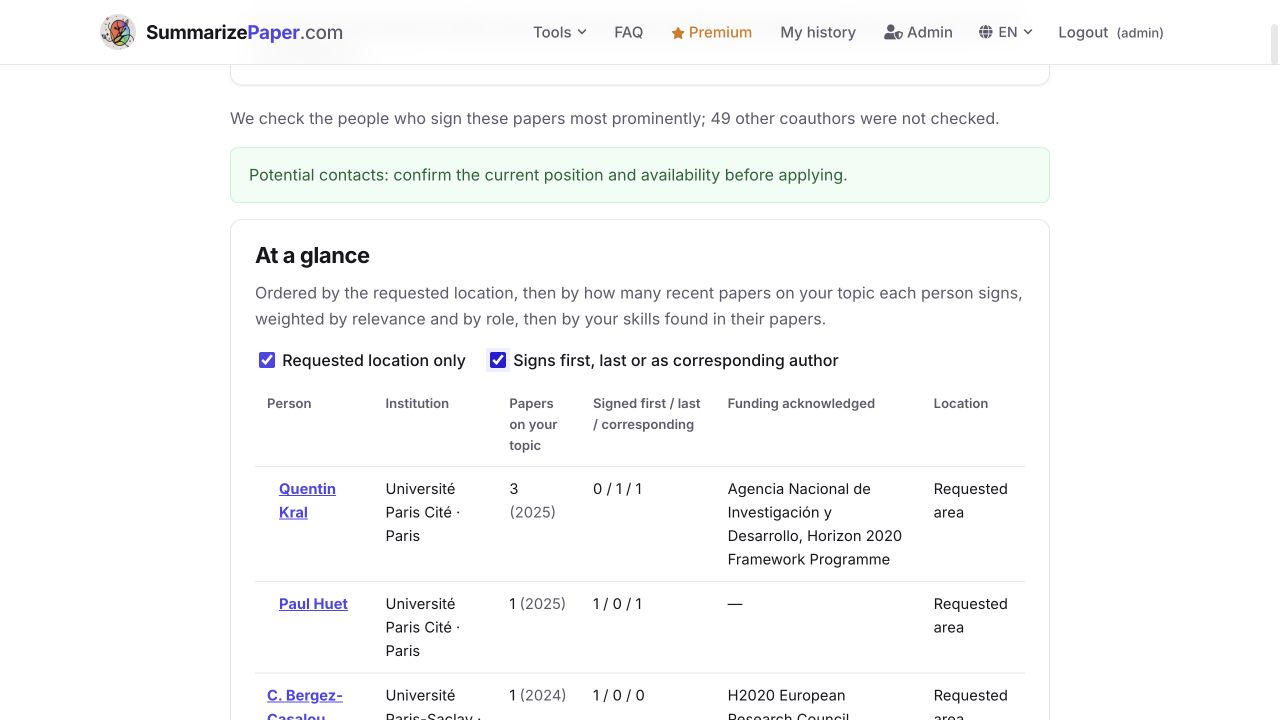
The table shows papers on the topic, authorship positions and funding acknowledged in papers. Use those facts to decide which cards to read. Author order varies by discipline and does not prove a right to supervise. When people sign the same papers together, prepare one targeted enquiry rather than identical messages to every coauthor.
Uncheck the location filter to examine the alternatives you allowed in the form. The result is a starting selection, not a complete directory of researchers or vacancies.
4. Understand the connection to one person’s work
Open A. Meredith Hughes, shown as an alternative outside the requested area. The card connects the student’s radiative-transfer and data-analysis interests with measurements of gas and dust in 49 Ceti. Supporting publication links let you inspect the basis for that connection.
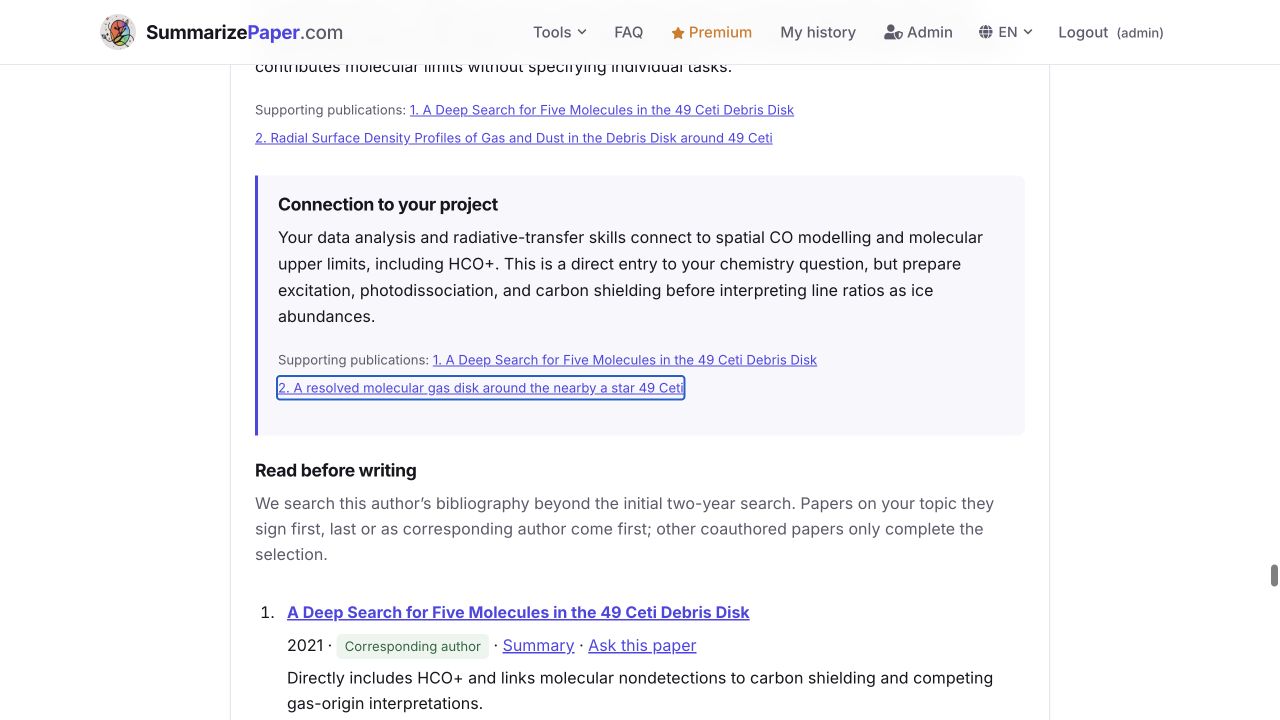
The useful question is not whether this is the most prominent researcher in the list. It is whether the cited work gives you a method to learn and a specific question to discuss. The card’s bibliographic affiliation still needs an institutional check.
5. Turn a suggested reading into a scientific question
Under Read before writing, open Reading guide and questions for A Deep Search for Five Molecules in the 49 Ceti Debris Disk, by Klusmeyer et al. (2021). This older reading complements the recent papers that first brought the person into the search.
The reading help is explicitly based on the abstract. It identifies the molecular search and proposes: “What would be needed to turn the HCO+ flux limit into an abundance constraint?”
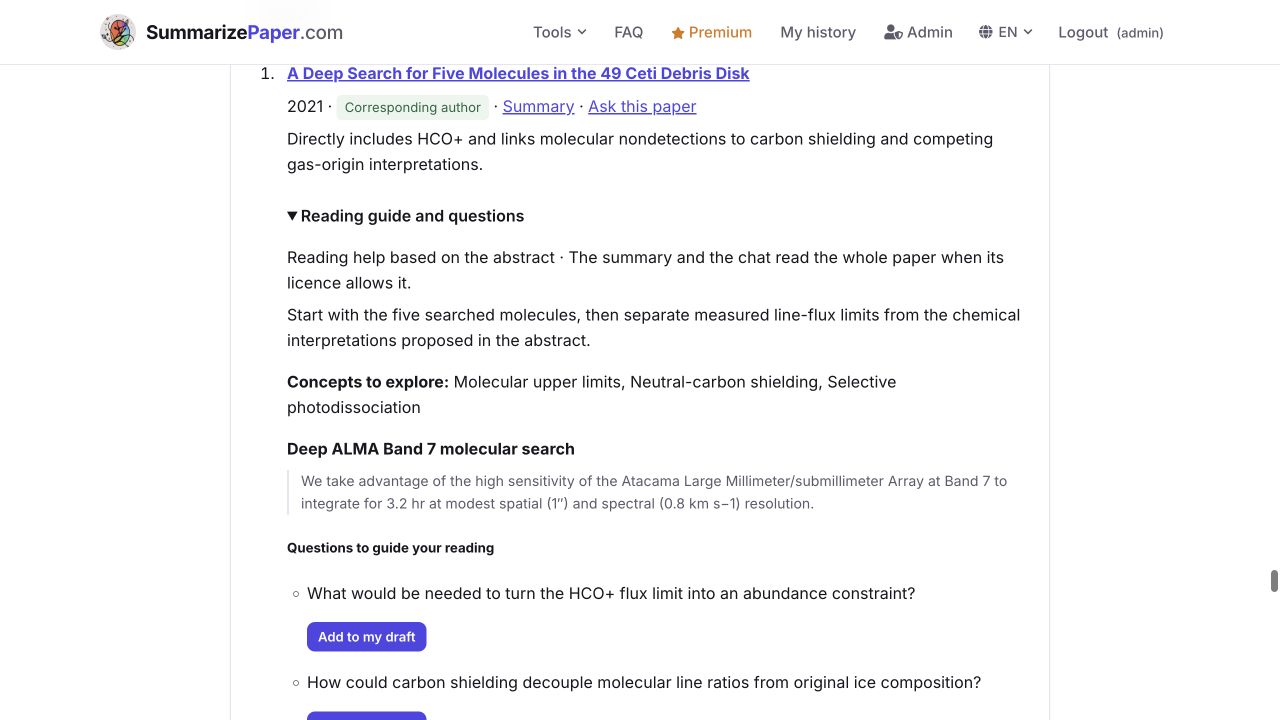
Click Add to my draft to retain the question in the first-message draft. Before using it, investigate what was measured and what assumptions enter the interpretation.
Read the full paper and inspect its figures
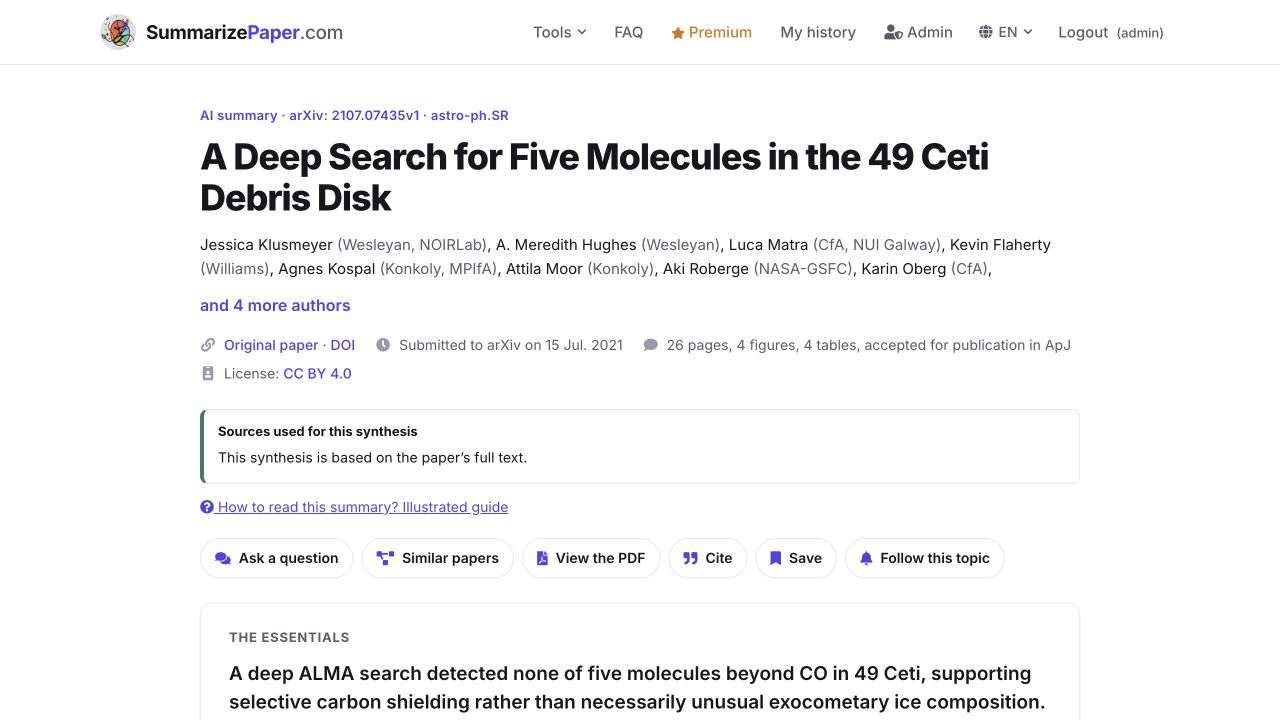
Open the arXiv paper page. The CC BY 4.0 licence and This synthesis is based on the paper’s full text notice identify the source of the synthesis. The study reports nondetections of five targeted molecules, rather than proof that those molecules are absent.
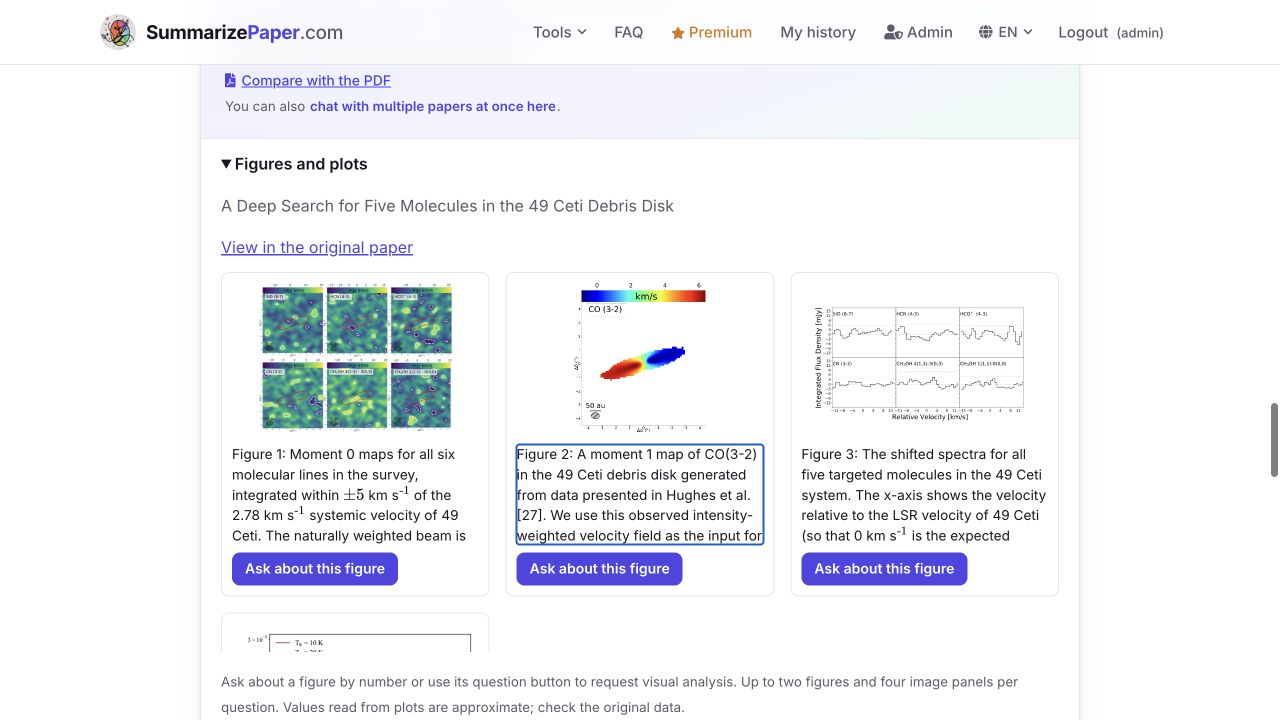
Expand Figures and plots. All four figures are accessible in the gallery checked here, including the original images and spectra. Enlarge them to inspect the measurements, and keep the PDF available for the complete methods and tables.
For the enquiry, distinguish a measured line-flux upper limit from a derived abundance constraint. Excitation assumptions and selective shielding matter to that conversion. This turns a broad interest in gas chemistry into a question grounded in a paper.
6. Check institutional evidence and funding separately
Open Sources, affiliation and points to verify. The card dates its affiliation evidence and links the underlying publication, author record and institution. Funding acknowledgements refer to papers; they do not establish a funded student position.
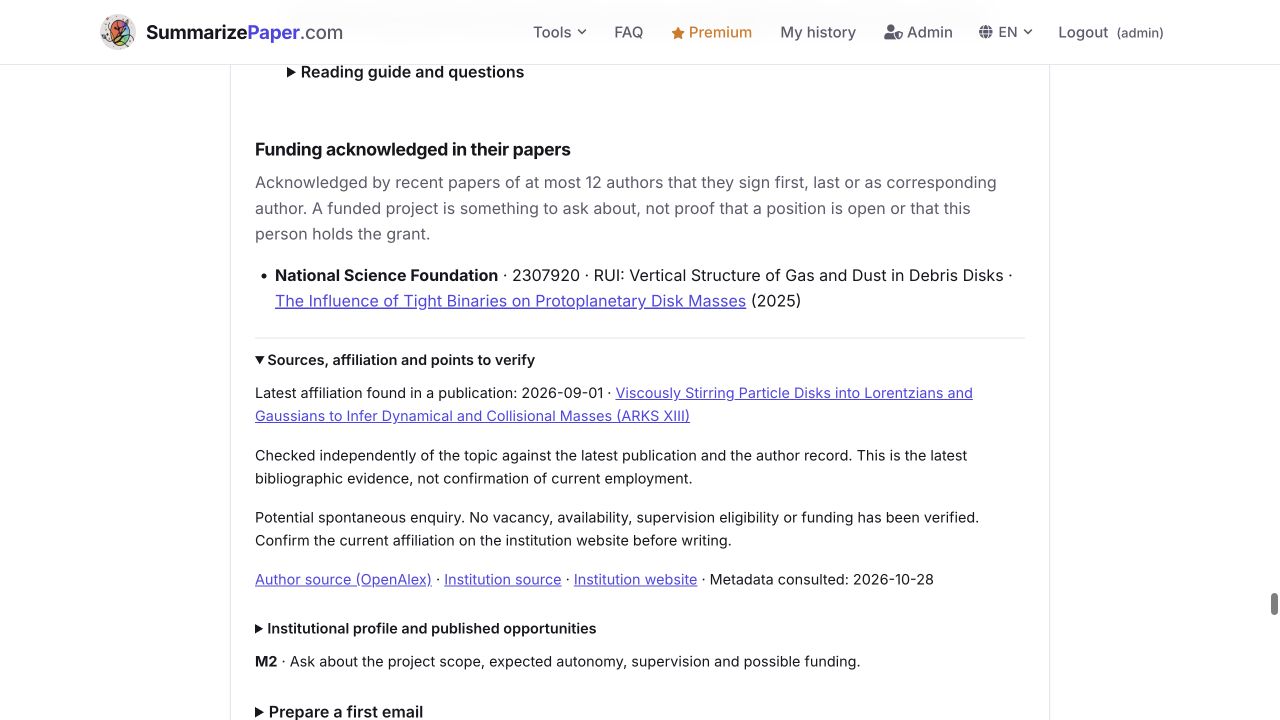
Read an official institutional page as well. The Wesleyan planetary-science directory lists Meredith Hughes among its faculty. That helps check the person and institution, but does not confirm a six-month placement, admission eligibility or funding for April 2027.
After saving a lead, My leads also offers Check an official profile or published offer. It checks public structured data on the institution’s website. If no matching structured profile or offer is confirmed, read the page yourself: an empty automatic result is not evidence that the person or opportunity does not exist.
The result page’s Euraxess and CNRS links provide a separate route to advertised opportunities. Check the actual announcement for eligibility, dates and application instructions.
7. Compare different scientific directions
Save useful leads, open My leads, tick two to four people, then choose Compare selected leads. Here we compare A. Meredith Hughes with Nicole Pawellek: the stored evidence and readings point towards molecular diagnostics and gas–dust structure from different angles.
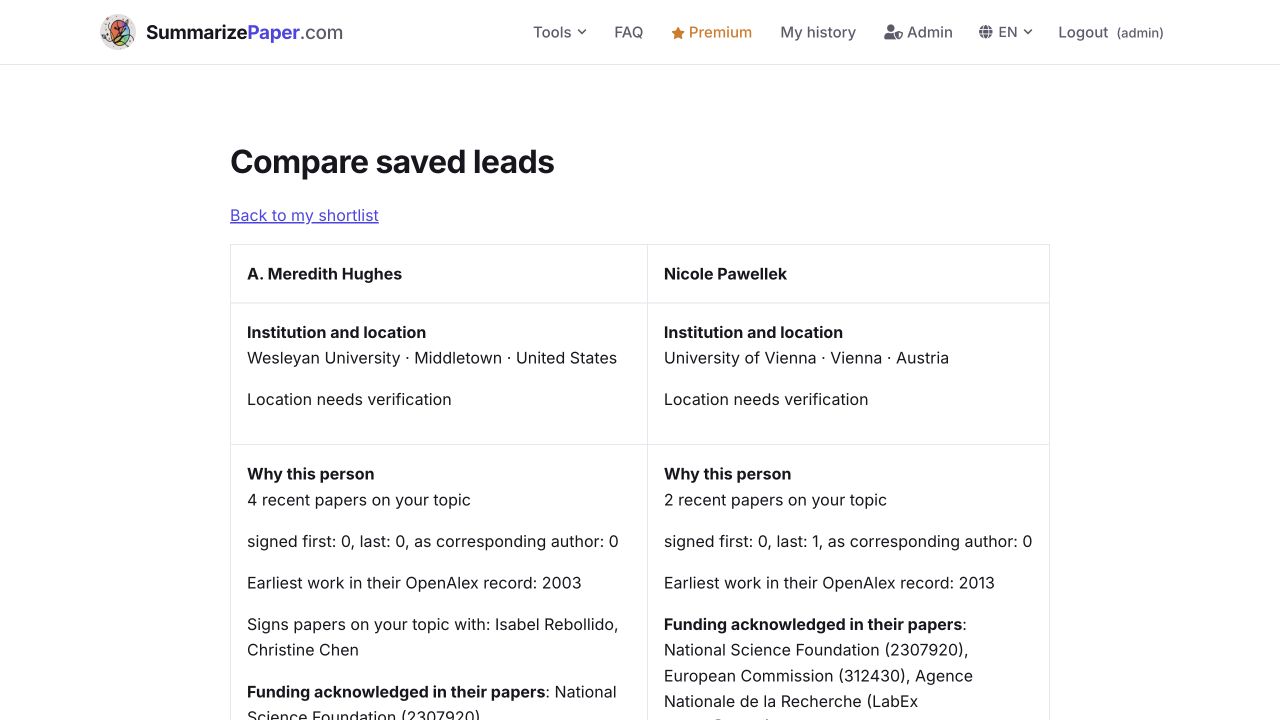
Use the comparison to decide which reading and project direction to investigate first. Both are alternatives to the requested location in this search. The table is not a ranking of admission chances or confirmed supervisors.
8. Make the draft personal and keep a next step
Expand Prepare a first email. The initial draft uses the profile, dates and a publication. Shorten it and retain one concrete question. Our edited example asks which assumptions turn the HCO⁺ line-flux limit into an abundance constraint, and how carbon shielding affects that interpretation.
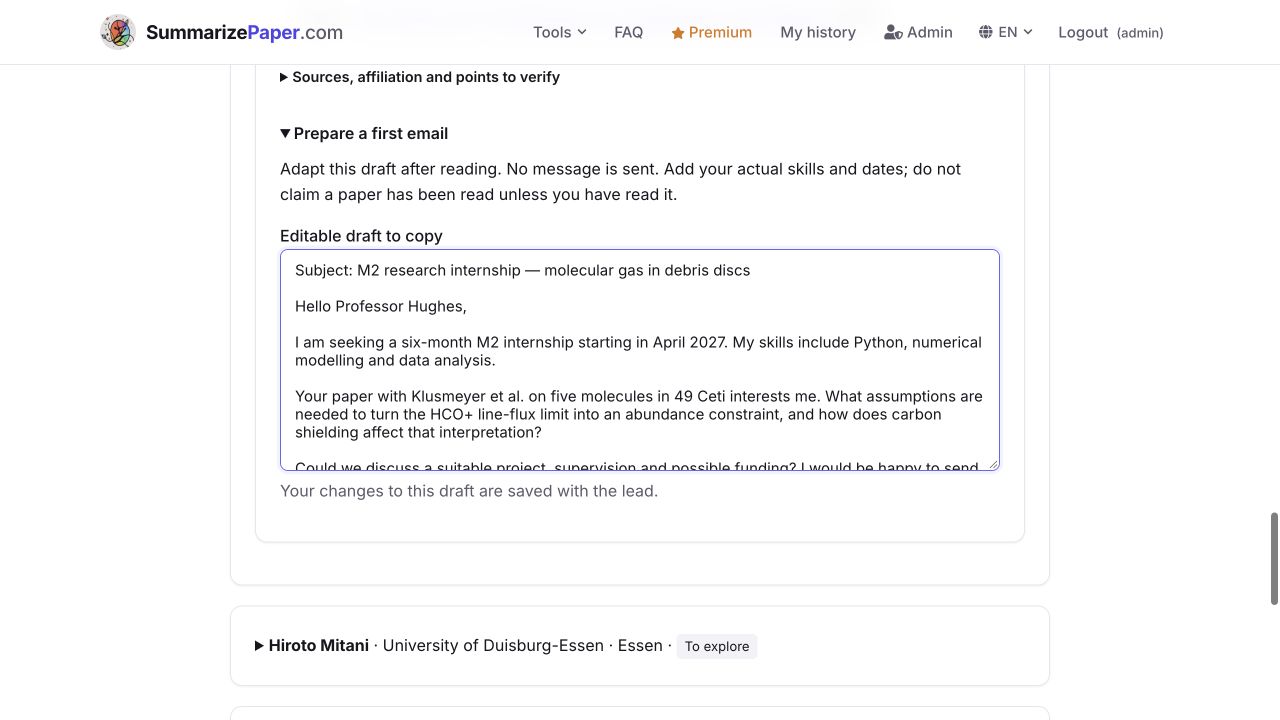
Replace the bracketed signature, use your actual skills, and only claim to have read a paper after reading it. The editable draft is stored with the lead and can be copied into your own email application.
In My leads, keep a note describing what to check next: the paper’s assumptions, project scope, day-to-day supervision and possible funding. Changes save automatically; check the save confirmation before leaving.
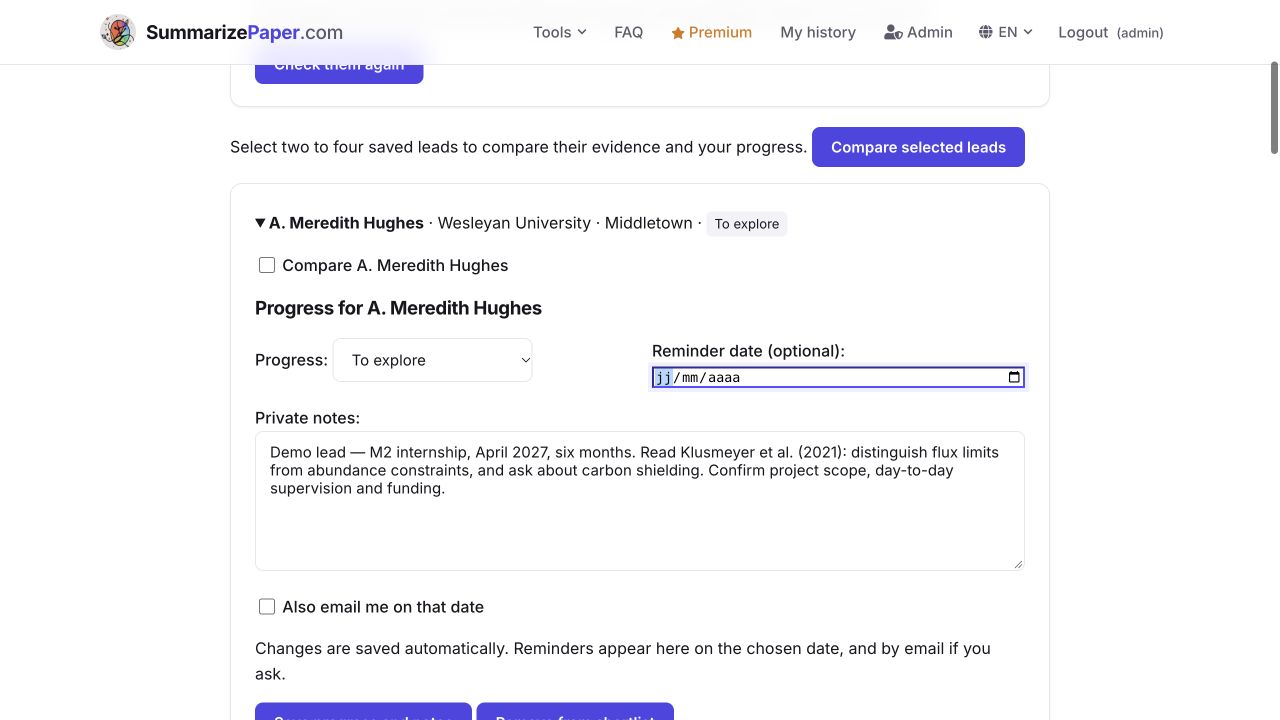
Update Progress as you act: To explore, Paper read, Contacted, Reply received and later steps. A reminder date is optional, with a separate option for an email reminder. You can also add a lead’s readings to a collection for further reading, chat or export.
The Collections guide shows how to annotate those papers. Who works on it? broadens the scientific exploration beyond the placement shortlist.
Reading sources
Excerpts and figures from Klusmeyer et al., A Deep Search for Five Molecules in the 49 Ceti Debris Disk (2021) are under CC BY 4.0. They are displayed within the interface alongside paraphrased explanations. Results observed on 28 October 2026 illustrate a search; they do not announce recruitment by the people shown.
From a research question to a first enquiry · Premium+
Prepare my internship or PhD search